The Time In Front Of Us
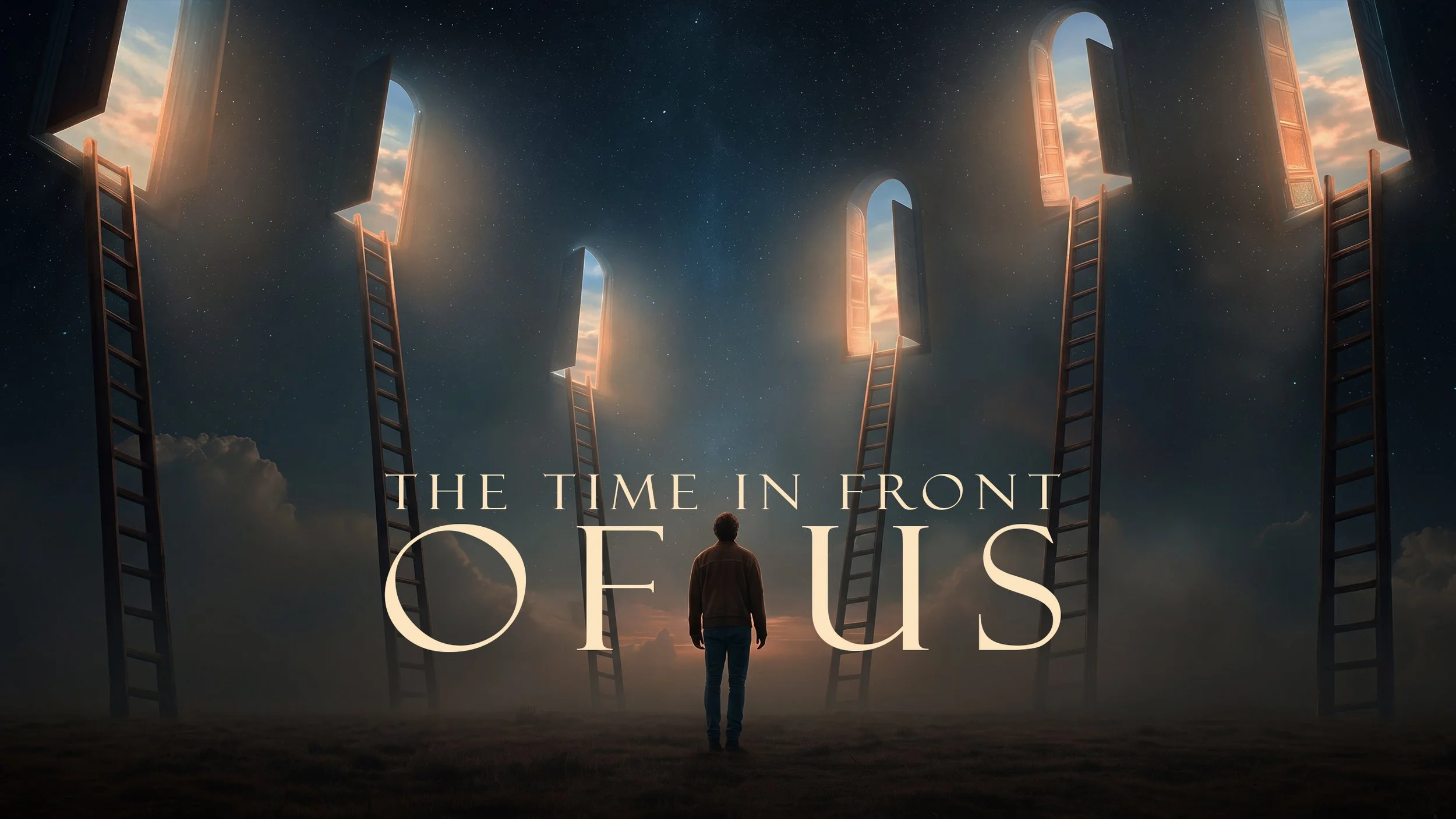
The Disappearing Structure
For most of our adult lives, our time is spoken for long before we ever wake up in the morning. Careers create an invisible structure around our lives. Meetings, deadlines, responsibilities, commutes, expectations, and obligations determine how our days unfold. We become so accustomed to that rhythm that we mistake it for life itself. Then, one day, the structure disappears.
Whether through retirement, a layoff, a health event, or simply reaching a point where we choose a different path, many of us eventually find ourselves standing in unfamiliar territory. We suddenly have something we have spent decades wishing for.
Time.
At first, it feels exhilarating. Then something unexpected happens. The freedom we imagined for years often arrives carrying an uncomfortable question that our careers had been politely postponing.
Now what?
The Uncomfortable Question
I don't think we talk about this transition nearly enough. We spend decades preparing financially for retirement, yet remarkably little time preparing psychologically for the sudden absence of the identity that organized so much of our lives. We become experts in our professions but beginners once again in our own freedom.
My own career came to an unexpected close after more than three decades in the entertainment industry. Like many people, my first instinct was to replace what I had lost as quickly as possible. I began thinking about the next job, the next opportunity, the next version of the life I had just left behind. Looking back, I think that instinct came less from excitement than from discomfort. Silence has a way of asking questions that constant motion allows us to avoid.
For the first few months I filled that silence the way many professionals do. I researched constantly. I explored new technologies. I experimented with workflows. I stayed busy because busyness felt familiar. It felt productive. More importantly, it felt safe. Eventually, however, something became impossible to ignore.
The technology wasn't the story. The career wasn't the story. Even the layoff wasn't the story. Those were simply the circumstances that forced me to confront a much older question, one I suspect many of us eventually encounter whether we expect to or not. What deserves the healthy years I have left?
The older I become, the more that question changes the way I see almost everything. When we are young, time feels renewable. We instinctively assume there will always be another year to learn something new, another decade to pursue an old dream, another opportunity to reconnect with the parts of ourselves that we set aside while building a career.
As we age, that assumption begins to change. Not because life suddenly becomes pessimistic, but because it becomes more honest. We begin to realize that the truly scarce resource was never money. It was never status. It was never even success. It was time. Not simply the number of years remaining, but the years in which our health, curiosity, energy, and imagination still allow us to fully participate in the world.
That realization has fundamentally reshaped nearly every decision I make. I do not regret the pace of those earlier years. They allowed me to build a career I remain deeply grateful for. But distance has a way of changing perspective. The question I ask myself today is no longer, "How much can I accomplish?" It is becoming, "What is worthy of the time I have left?" They sound similar. They are profoundly different questions.
The Illusion of Measurement
For much of our lives, we optimize for things that are surprisingly easy to measure. Income. Promotions. Recognition. Possessions. Accomplishments. There is nothing inherently wrong with any of those pursuits. Many of them create security, provide for our families, and allow us to contribute meaningfully to the world. I have benefited from them myself. The problem is not that they matter. The problem is that they are measurable.
What is measurable has a tendency to dominate our attention, often at the expense of things that are far more important but much harder to quantify. We rarely ask ourselves whether we are becoming more curious. Whether we are becoming more compassionate. Whether we are making time for wonder. Whether we are creating memories that will still matter twenty years from now. Whether we are becoming more fully ourselves. Those questions don't fit neatly into a spreadsheet. There are no annual performance reviews for living a meaningful life. Perhaps that is why so many of us postpone them.
We tell ourselves we'll travel when work settles down. We'll learn the instrument after the next promotion. We'll write the book after retirement. We'll spend more time with the people we love once life becomes less busy. The trouble is that life has a remarkable ability to remain busy. One responsibility folds into another. One season blends into the next. Years disappear with surprising efficiency.
Eventually we discover that the limiting factor was never opportunity. It was health.
The Two Clocks
That realization has become impossible for me to ignore. As we grow older, we slowly begin to understand that there are really two clocks running simultaneously. The first measures the number of years we have left. The second measures something much more fragile: the years in which our bodies, our minds, and our energy still allow us to fully engage with the people, places, and experiences that make life meaningful.
Those clocks are not the same. One may continue ticking long after the other has begun to slow. I think we spend far too little time acknowledging that distinction.
We save diligently for retirement because we understand financial compounding. Yet we rarely think about experiential compounding. Some experiences simply belong to particular seasons of life. There are mountains we may never climb at eighty. There are adventures that ask something of our bodies we may not always be able to give. There are conversations we believe we will have someday with people who may not still be here when someday finally arrives. Recognizing that reality isn't pessimistic. It is clarifying. It doesn't make life smaller. It makes it more precious.
The Changing Shape of Ambition
For me, this realization has completely reordered my priorities. Ambition itself isn't the problem, but it no longer occupies the top of the hierarchy. The question has changed. Instead of asking, "How much more can I accomplish?" I increasingly find myself asking, "What experiences, relationships, and creative pursuits would I regret leaving unexplored?"
That shift has surprised me. For most of my life I assumed freedom would simply allow me to work harder on the things I already loved. Instead, freedom has been asking something much more difficult. It has been asking me to decide what is truly worthy of my remaining attention. Those are not the same question. And I suspect they lead to very different lives.
That realization has also changed the way I think about ambition. For most of my career, ambition meant saying yes. Yes to the next opportunity. Yes to the next responsibility. Yes to building larger teams, solving more difficult problems, and pushing myself toward increasingly ambitious goals. There is a season of life where that makes perfect sense. Growth often requires us to stretch beyond what feels comfortable. But somewhere along the way, ambition changed its shape. It became less about adding and more about choosing.
When time begins to feel finite, every commitment carries a visible cost. Every yes becomes a no to something else. Another project may mean less time with the people we love. More income may come at the expense of experiences we can never buy back. Another promotion may indefinitely postpone the creative dream we have promised ourselves we will pursue "someday." The older I become, the less interested I am in accumulating accomplishments simply because they can be accumulated. I still care deeply about meaningful work. I still want to build beautiful things, contribute to the people around me, and leave something worthwhile behind. But I have become much more intentional about asking a different question.
What is all of this for?
Looking back, I don't remember most of the meetings that once felt urgent. I don't remember many of the deadlines that consumed entire weeks of my life. What remains are entirely different kinds of memories. I remember the extraordinary people I had the privilege of working beside. I remember watching young artists discover confidence they didn't yet know they possessed. I remember impossible creative problems that a room full of passionate people somehow solved together. I remember laughter. I remember friendship. I remember feeling deeply engaged in the act of creating something that mattered. The work itself was important. The life surrounding the work was even more important. Perhaps that is what becomes clearer with age.
We spend much of our early adulthood trying to maximize success because we assume success will eventually produce a meaningful life. But there comes a point where the equation reverses. We begin asking whether the choices we make are actually helping us live more fully. I don't think the purpose of growing older is to become afraid of time. If anything, I think it is an invitation to become more awake to it. To notice the ordinary moments we once hurried past. To protect the relationships we assumed would always be there. To finally pursue the ideas that patiently waited while we convinced ourselves we were too busy. To remember that our careers were always meant to support our lives—not become substitutes for them.
Maximizing Aliveness
That shift has fundamentally changed how I think about success. For decades, I optimized for productivity. Like many professionals, I measured my life by output, responsibility, and accomplishment. There was always another milestone to reach, another problem to solve, another opportunity to pursue. Today, I find myself pursuing something very different. I want to maximize aliveness. Not productivity. Not status. Not accumulation.
Aliveness.
The feeling of being fully engaged with the brief time I have been given. Continuing to learn. Continuing to create. Continuing to experience wonder. Continuing to build meaningful relationships. Continuing to say yes to the parts of life that make me feel deeply present rather than simply busy. I suspect every person has their own version of what creates that feeling. For one person it may be raising children. For another it may be teaching, traveling, mentoring, restoring old cars, composing music, planting a garden, or finally writing the book they've been carrying around for years. The activity itself isn't what matters. The feeling does.
I don't know how many healthy years remain in front of me. None of us do. But I have become increasingly convinced that one of the greatest mistakes we can make is spending those years optimizing for a life that looks successful while forgetting to ask whether it actually feels alive. Perhaps that is one of the hidden gifts of growing older. We eventually stop asking how much life we can fit into our work. We begin asking how much life we can fit into our lives.
