The Abandoned Room
The Quiet Loss of Self
There is a peculiar kind of loss that almost never announces itself.
We notice the loss of people, of jobs, of health, and of certainty because they arrive with dates attached to them. They divide our lives neatly into a before and an after, demanding to be grieved or managed. But some of the most significant losses happen so gradually that we do not recognize them while they are unfolding.
They accumulate in the background of an otherwise successful life. One pragmatic decision, one heavy responsibility, one promotion, and one busy season at a time. Until one day, we find ourselves looking back across decades, wondering when we stopped becoming the person we once imagined we might be.
The tragedy is that almost none of us can point to the moment it happened.
We simply discover, often much later, that some part of us has grown quiet.
The House We Once Called Home
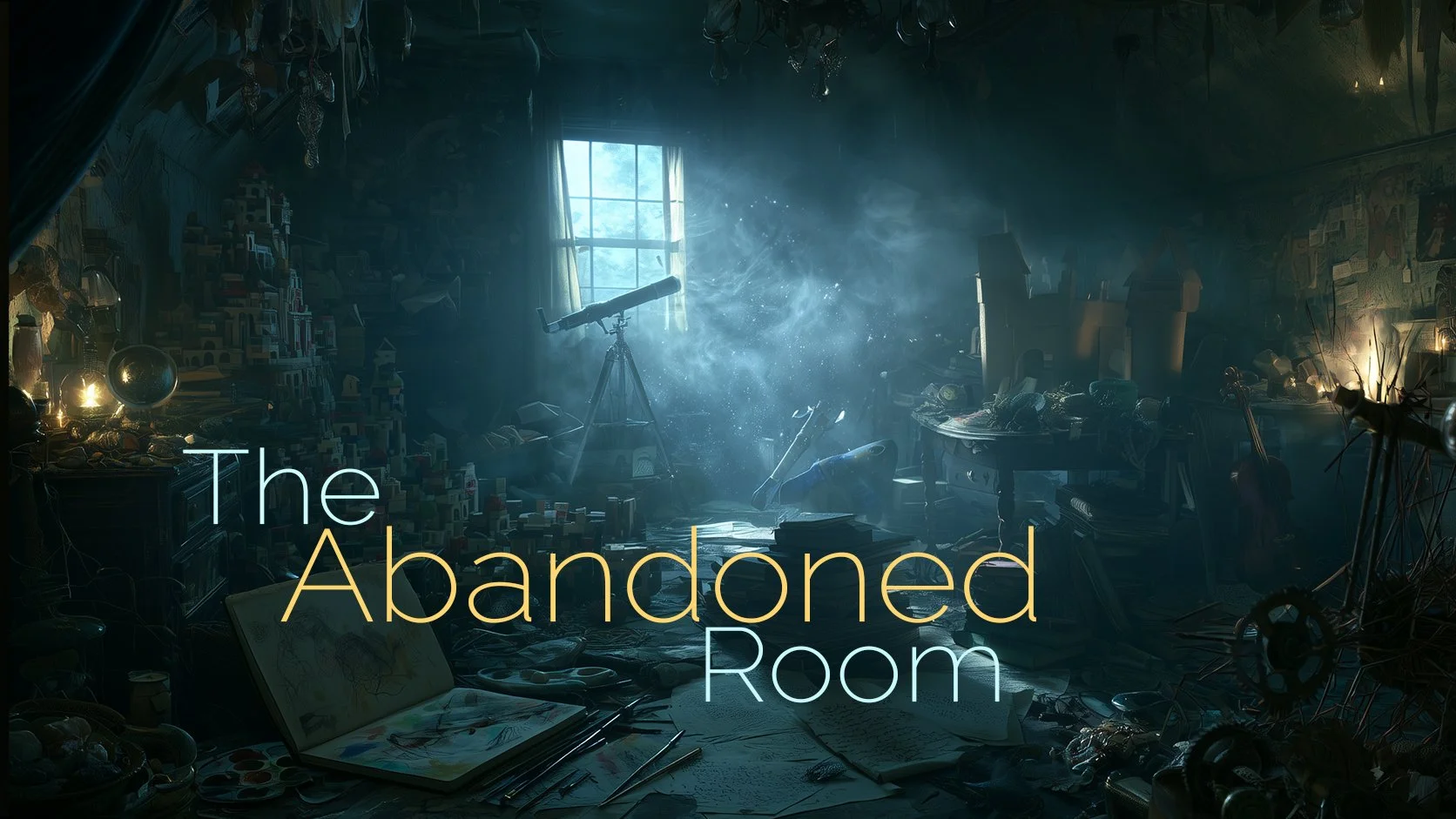
As children, every room in the house belongs to us.
We wander freely from one to another. We draw without worrying whether we are artists. We invent stories without asking if we are writers. We build impossible machines without wondering whether we are engineers. We become fascinated by the intricate mechanics of nature, the strange creatures beneath a rock, and the endless possibilities hidden inside an ordinary afternoon.
Children do not think in identities. They think in curiosity.
Their interests are not competing versions of themselves. They are simply different expressions of the same instinct: to explore whatever captures their imagination next. They have not yet learned that the world prefers neat categories or that one day they will be asked to describe themselves with a single word.
The Cost of Becoming Someone
Eventually, the world asks us to change.
It asks us to put the toys away. Not because the world is cruel, but because civilization depends upon specialization. We need surgeons who understand the human body, architects who think in structure, teachers who dedicate themselves to helping others learn, and directors who can align hundreds of people toward a single creative vision.
Specialization is one of humanity's greatest strengths. It may also carry one of its least acknowledged costs.
Every professional path we commit ourselves to asks us to spend less time walking the others. We trade breadth for mastery, wonder for competence, and exploration for expertise. We pack away the fragmented interests of childhood into forgotten rooms, assuming we will return once life settles down.
Life rarely settles down.
Instead, our profession slowly becomes our identity. Our title becomes shorthand for our worth. It tells the world where to place us and, more dangerously, teaches us where to place ourselves. Over time, we stop introducing ourselves as people and begin introducing ourselves as occupations.
It happens so gradually that it feels entirely natural.
When the House Grows Quiet
Then, one day, the house grows quiet.
Perhaps we retire. Perhaps we are swept away in a corporate layoff. Perhaps technology transforms our profession faster than we can adapt. Perhaps our health simply refuses to negotiate with our ambitions any longer. However it happens, the structure we have relied upon for decades suddenly falls away.
Our first instinct is almost always the same.
We rush to find another title, another role, another structure that restores the familiar rhythm of our lives. We convince ourselves that what we have lost is employment, when what we are really mourning is identity. The silence that follows feels unbearable, not because it is empty, but because we no longer recognize ourselves without the noise.
The Ringing in the Ears
It is in that silence that many of us make our greatest mistake.
We run from it.
What we often need most is the very thing that feels most uncomfortable: stillness. Yet stillness takes longer than we expect. Decades of deadlines, meetings, manufactured emergencies, and constant production do not leave the nervous system overnight. You cannot hear the silence when your ears are still ringing from the noise of your own career.
When my own career finally became muted, I underestimated how long it would take for that ringing to fade. It took nearly a year before the dust truly settled and I could hear my own thoughts without the constant echo of the profession I had built around myself.
For decades I had worked in the AAA entertainment industry, feeding the visual storyteller while quietly neglecting another part of myself. When I was young, teachers believed I had an unusual aptitude for language. Writing came naturally. But adolescence arrived, my attention shifted toward belonging, and eventually my career demanded something different. I built a life around visual storytelling and gradually convinced myself that perhaps the early promise in writing had never really existed.
I had been telling myself that story for almost forty years.
The Stumbling Discovery
Then something unexpected happened.
I started writing again.
Not because I had set out to reclaim a forgotten childhood identity. I simply had ideas that insisted on being explored. One essay became another. Then another.
The strangest part was not discovering that I enjoyed writing.
It was realizing how familiar it felt.
It didn't feel like learning. It felt like returning to a conversation that had been interrupted decades earlier. That realization forced me to reconsider something much larger than writing itself.
What if I hadn't actually lost that part of myself?
What if it had simply been expressing itself through different mediums all along?
Storytelling had become worldbuilding. Writing had become leadership. Language had become visual direction. The instinct had never disappeared.
It had simply changed occupations.
I am still at the beginning of this journey. I do not know whether anyone will ultimately find value in these essays, and I honestly do not know how much of that young writer still remains. But for the first time in a very long time, the outcome feels less important than leaving the door open.
Because if one forgotten room could still be waiting after all these years...
What else might still be alive inside the house?
The Forgotten Doors
Which makes me wonder:
What did you leave behind?
When you look back across your own life, which rooms softly closed while you were busy becoming successful? Who is still waiting inside them?
Perhaps this is one of the hidden purposes of growing older.
We often assume that the first half of life is about becoming someone. I'm beginning to wonder whether the second half invites us to become ourselves again. Not by rejecting everything we have built, but by reconnecting with the parts of ourselves that were never invited to come along.
If life eventually gives you an unexpected pause—a layoff, retirement, an empty nest, or simply a season of stillness—resist the urge to fill it too quickly. The silence may feel unfamiliar, even frightening. Stay with it long enough for the ringing to fade.
Then walk back through the house.
Open the forgotten doors.
Not in search of who you used to be, but in search of the parts of yourself that never truly left.
They have simply been waiting for you to remember where they live.
