Emergence- A Living Portrait
Breathing Through the Storm
Some creations take decades to surface. Emergence began almost twenty-five years ago as a song — a quiet plea written in the space between longing and resilience.
“You’ve got to hold me up,
Hold me up,
Don’t let me fade away.”
Years later, those same words found their reflection in paint: a woman rising from the ocean in a storm. That image became the visual echo of the song — the soul surfacing through chaos, gasping for air, finding enough breath to keep fighting.
The Creature Beneath the Waves
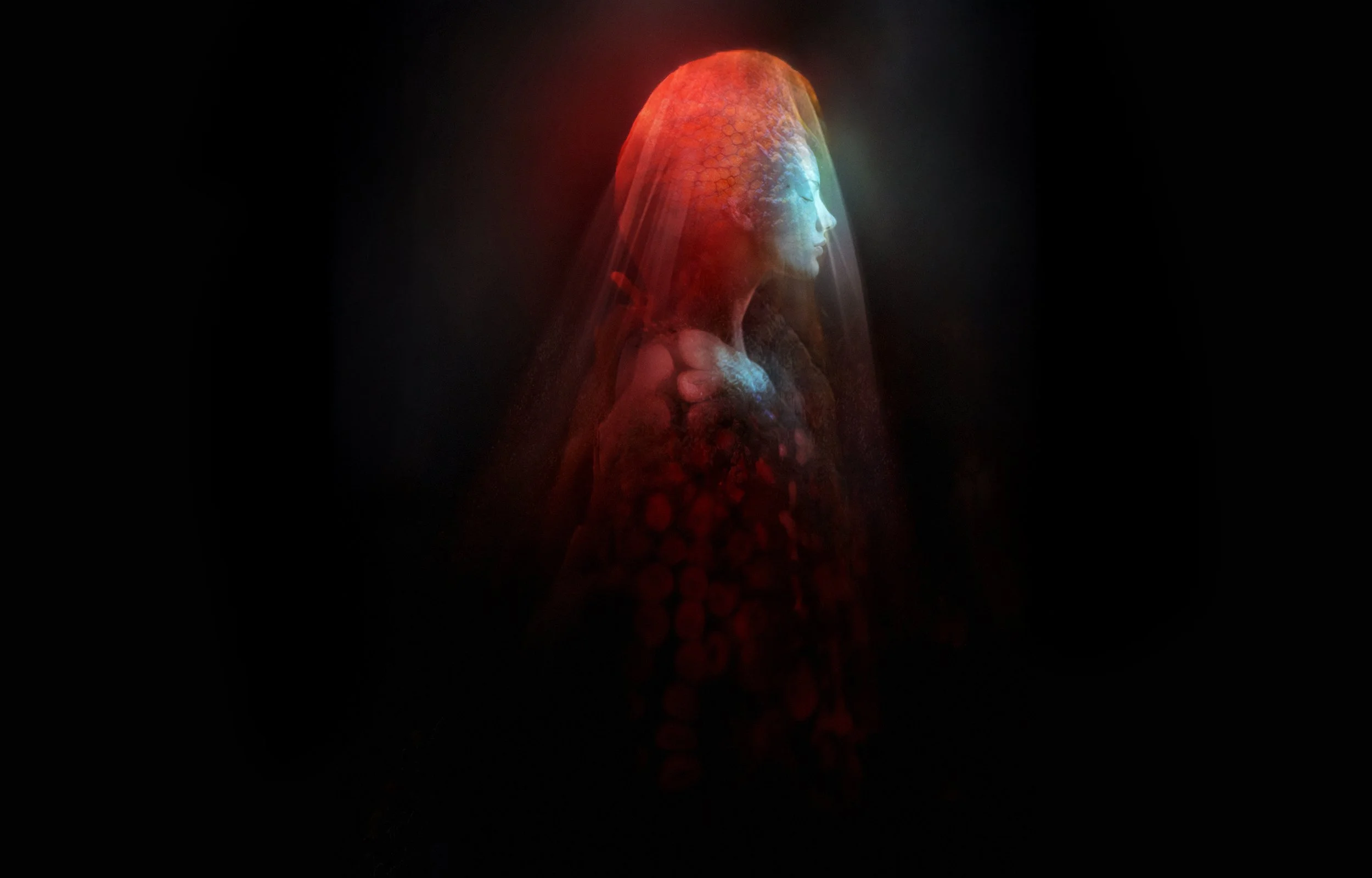
The woman in the painting Emergence, did not begin as human.
In her earliest form, she was half human, half octopus. A being born of the deep. The tendrils and membranes along her body were not grotesque, but protective — symbols of the layers we grow when we hide from pain or truth.
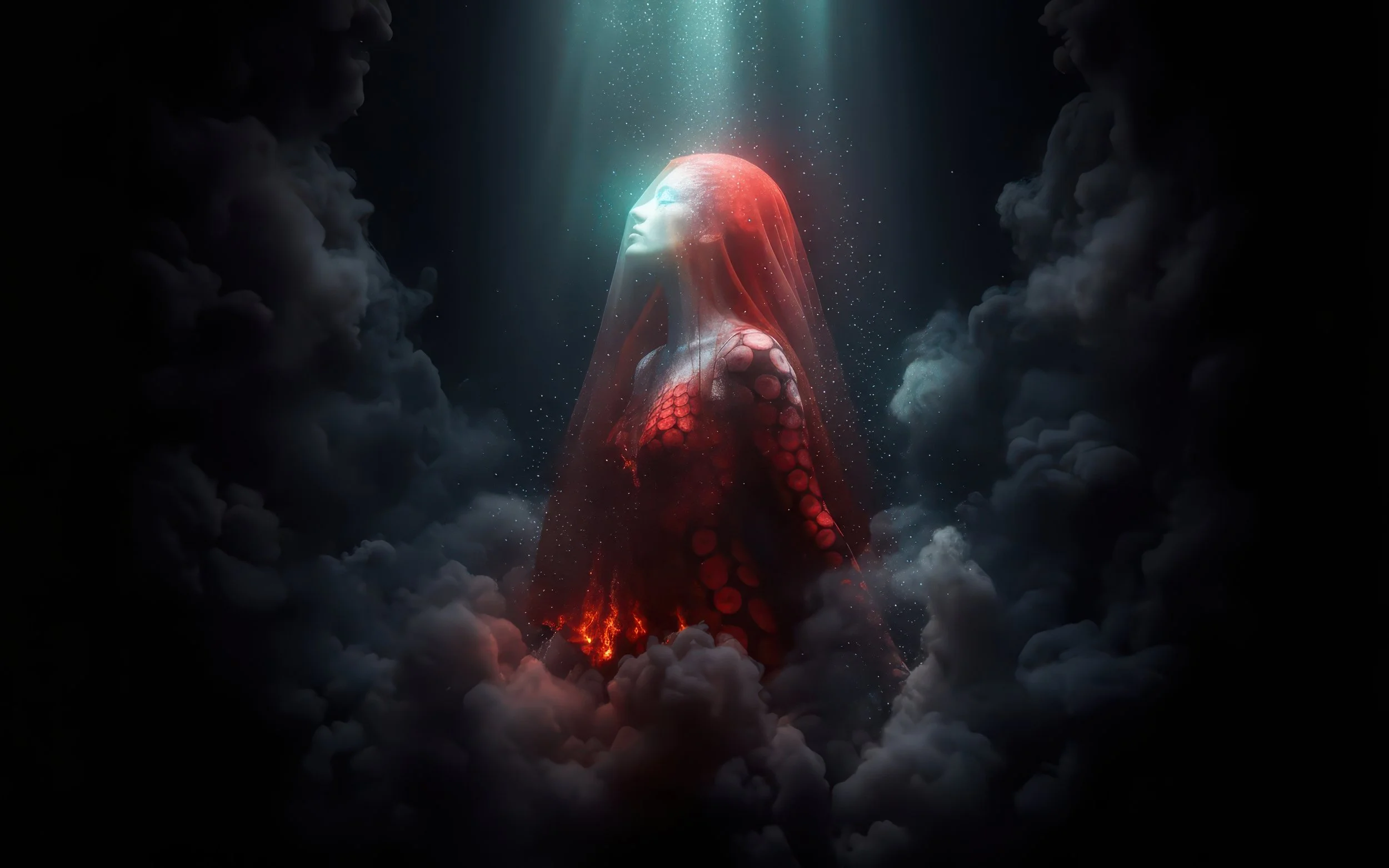
Underwater, she is safe but unseen. The depths represent that unconscious space where we store what we cannot yet face. Her skin, a cool bioluminescent blue, glows faintly. A fragile radiance pushing against the dark. It is the beauty of the self trying to emerge, even before it knows how.
The Light Within the Deep
Throughout Emergence, bioluminescence threads through the imagery like a secret language of hope. It flickers across her skin and ripples through the water — the inner light that refuses to die.
Later, as the sequence unfolds, the colors begin to bleed and merge, cascading into shifting hues of violet, cyan, and rose. These transitions are not decoration — they are emotional signals. Each bloom of color represents a breath of realization: there is beauty here, even in the wreckage.
The Dance as Ritual
Her movements in the water are not random; they are ritual. She dances as if shaking loose the heaviness of the depths, each gesture a physical prayer to reclaim herself. The choreography is both restrained and fluid — half struggle, half surrender.
And then she dances with the fish — creatures of light and motion that orbit her like living thoughts. This communion is not performative; it’s symbolic. The dance is how she learns to coexist with her past, her fears, her beauty. It’s how she tells the water, I’m still here.
The Fish as Reflection
Among them, one fish stands apart — luminous, fragile, and impossibly alive. She follows it through the water, captivated. This is no ordinary creature; it is the version of herself she might become — untethered, radiant, whole.
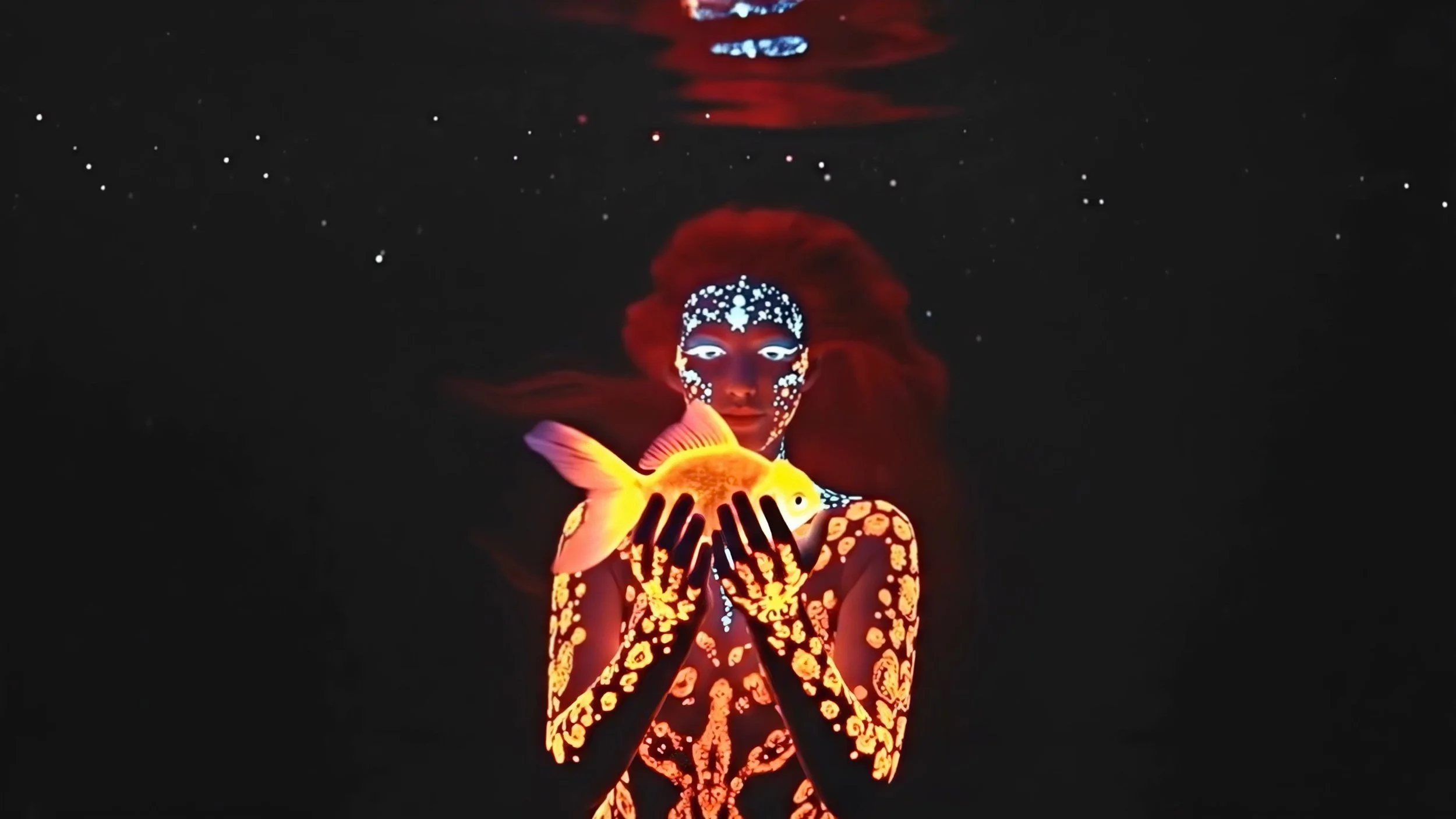
When she catches it, she holds it gently, reverently. She studies its glow.
When she kisses it, it’s an act of recognition — of love rediscovered. The fish becomes the embodiment of self-compassion, proof that she can still love, and still be loved.
As it slips through her fingers and swims away, she follows — chasing herself, chasing hope. In pursuing the fish, she commits to becoming.
From Lyric to Canvas to Motion
The painting attempts to capture the fragile balance between despair and awakening — a breath suspended between two worlds. The red fabric of her dress became the lifeblood of the image, the pulse of her humanity. The blue of her skin, untouched by warmth, became the calm within the chaos.
When I merged the painting with the original lyrics and brought it into motion, Emergence evolved into a Living Portrait — a moving meditation on endurance and becoming. Every ripple, every flash of light, was timed to the song’s pulse.
The moment she reaches toward the fish and the world floods with color is the visual translation of the lyric’s plea — “Hold me up.”
It’s the realization that the light we seek may already be in our hands.
Becoming Through Resistance
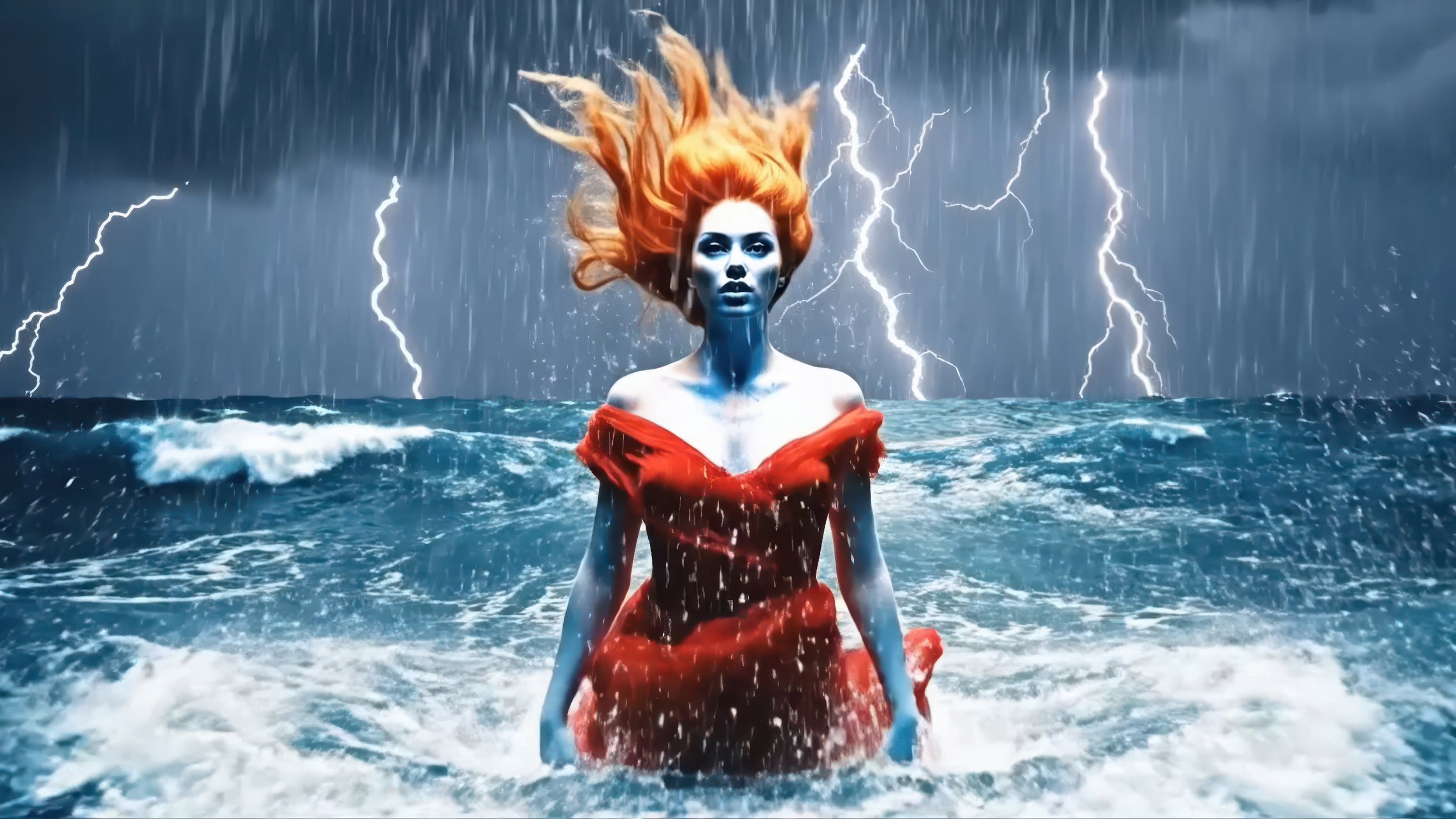
By the end, she hasn’t escaped the storm — she’s learned to breathe within it. The waves still crash. The lightning still fractures the sky. But within the chaos, she glows — her bioluminescence now pulsing brighter, synchronized with the world around her.
The bleeding colors are not resolution; they are renewal. A promise that beauty endures. A reminder that life keeps testing us, and that the act of continuing — of dancing, of rising, of loving — is the transformation.
“You’ve got to hold me up…
Don’t let me fade away.”
Those words no longer sound like a plea. They feel like a truth — that what holds us up is not rescue, but the courage to keep reaching toward the light.
The Meaning of Emergence
Emergence is not about completion; it’s about continuity.
It’s the moment between breaking and becoming, between darkness and illumination. It’s the ritual of self-acceptance — of finding beauty within imperfection, of loving the light that flickers inside us, even when the storm refuses to end.
The dance, the color, the fish, the storm — all speak to one truth:
hope lives in motion.
And through that motion, we rise.
